
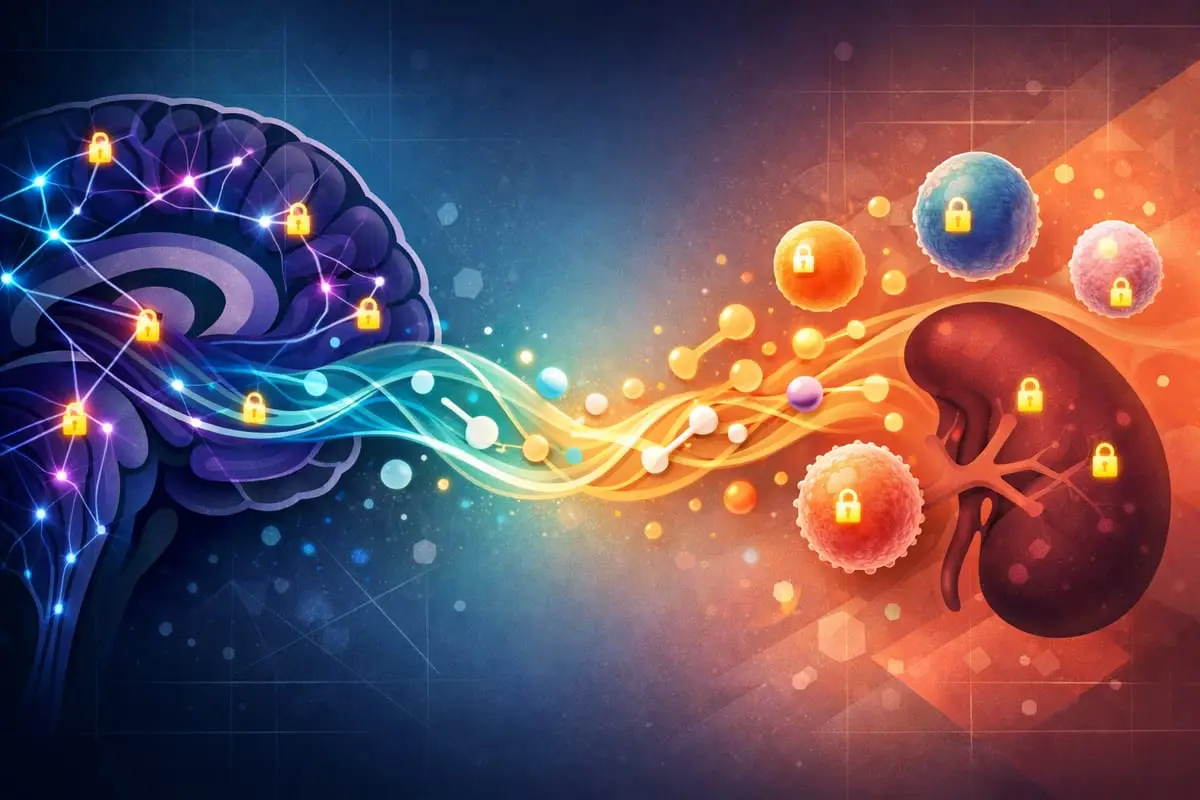
This is a popular-science explainer, not medical advice: if you have problems with sleep, medication or your health, the decision belongs to a doctor, not to an article. Our body is made up of many anatomical systems that work together to form a single organism: the nervous, digestive and cardiovascular systems, to name only a few. Each of them has its own roles and tasks, but inside these systems there are “subsystems” that help link them together and coordinate their work.
One of these subsystems is the endocannabinoid system.
Once you understand which organs and structures it is connected to, it becomes clear why the effects of THC, CBD and other cannabinoids can be very broad and reach far beyond “just the brain and mood”.
Terms
- Cannabinoid: a molecule that can interact with cannabinoid receptors.
- Endocannabinoids: cannabinoids that the body produces itself.
- Exocannabinoids: cannabinoids that come from outside (they have to be consumed).
- Phytocannabinoids: exocannabinoids of plant origin (for example, THC and CBD).
- Synthetic cannabinoids: exocannabinoids created in a laboratory.
- Neuron: a nerve cell that transmits signals.
- Neurotransmitters: chemical “messages” between neurons (for example, dopamine, serotonin, glutamate).
- Cannabinoid receptors: “docking sites” on cells; the main types are CB1 and CB2.
What the endocannabinoid system is made of
The endocannabinoid system has three main parts:
- Cannabinoid receptors: special structures on cells where cannabinoids can “dock”.
- Endocannabinoids: substances that the body produces.
- Enzymes: systems that make and break down these substances (in other words, regulate how much of them there is and how long they act).
From here on the focus is on receptors and cannabinoids. Keep in mind that chemical reactions are going on behind the scenes all the time (synthesis, breakdown, shifting concentrations), but their details are not covered here.
What receptors are and why nothing works without them
To grasp the idea of receptors quickly, the “lock and key” analogy helps:
- A receptor is a “lock” on the surface of a cell.
- The molecule that attaches to it is the “key”.
When the “key” fits and binds to the receptor, the cell responds: its activity may change, as may the speed of processes inside it or the way it communicates with other cells.
Why any talk of cannabinoid receptors starts with the brain
To understand the role of cannabinoid receptors, it makes sense to start with the brain.
The brain is made up of a huge number of neurons, the cells that carry information. Their surface holds many receptors of different types.
When a cannabinoid binds to a cannabinoid receptor on a neuron, it primarily modulates (that is, tunes) the release of neurotransmitters.
Neurotransmitters in simple terms
Neurotransmitters are the chemicals neurons use to “talk” to each other. Examples:
- dopamine
- serotonin
- glutamate
If the release of neurotransmitters changes, this can show up in perception, attention, speed of thinking, emotions, motivation, memory and so on.
The two main types of cannabinoid receptors: CB1 and CB2
There are more cannabinoid receptors, but the two best studied are:
- CB1: cannabinoid receptor type 1
- CB2: cannabinoid receptor type 2
The key principle: what matters is not only “whether there is a receptor” but also its density (how many receptors there are in a particular tissue or area).
CB1 receptors: where there are more of them and why it matters
Where CB1 density is highest
The highest density of CB1 receptors is in the brain (although they also occur elsewhere in the body).
Within the brain, CB1 density varies from area to area. For example, there are many CB1 receptors:
- in the cerebral cortex (from here on simply “the cortex”)
- in the hypothalamus
- in the cerebellum
Why receptor density matters
The cerebellum is involved in movement and coordination. It is stressed that receptor distribution differs between species: rodents have a higher density of cannabinoid receptors in the cerebellum than humans. That is why cannabinoids disrupt motor control more strongly in rodents.
In humans motor function can change too, but usually not to the same degree, because the distribution and density of receptors are different. It is also noted that in humans CB1 density is higher in the cortex than in the cerebellum.
Deep brain structures: the hippocampus and the basal ganglia
Some structures lie deeper and are not always easy to see when the brain is dissected:
- The hippocampus is linked to memory.
- The basal ganglia are a group of structures with various functions, including decision-making and memory-related processes.
The general idea: the effects of cannabinoids on the mind and behaviour largely depend on which receptors are activated and where there are more of them.
CB2 receptors: the periphery and the immune system
Worth remembering about CB2 receptors:
- they occur at higher densities in peripheral tissues (that is, outside the brain)
- historically it was thought that CB2 exists only in the periphery and CB1 only in the brain, but it is now known that both types can occur in both places
- the key difference, again, is density
Where CB2 receptors are especially typical
CB2 receptors are associated with lymphatic and immune tissues. Examples:
- the spleen (in the context of its lymphatic functions)
- the tonsils (lymphatic tissue in the nasopharynx and oropharynx that helps trap potential pathogens)
CB2 receptors are also found in reproductive tissues:
- in men, in the testes
- in women, in the uterus
But the main point: CB2 receptors often sit on immune cells, most prominently on B cells, and also on T cells, monocytes and neutrophils.
Because immune cells are key regulators of inflammation, a cannabinoid binding to CB2 can modulate inflammatory processes.
Cannabinoids: endo- and exo-
There are two large groups of cannabinoids.
Endocannabinoids
These are substances that the body produces itself. They are released by cells (including neurons and immune cells) and take part in the “everyday fine-tuning” of processes.
Exocannabinoids
These are substances that come from outside: they have to be consumed for an effect to appear.
The two main endocannabinoids: 2-AG and anandamide
There are several endocannabinoids, but the two best studied are:
- 2-arachidonoylglycerol (2-AG)
- anandamide
These substances are produced by neurons, immune cells and other tissues, and they “adjust the settings” where they are released:
- in the nervous system, by influencing how neurotransmitter release is regulated (dopamine, serotonin, glutamate and others)
- in the immune system, by influencing inflammatory processes
The key principle: endocannabinoids are released on demand and in the amounts needed, so the system works as fine regulation rather than as a one-off “big wave”.
Exocannabinoids: phytocannabinoids and synthetic cannabinoids
Exocannabinoids fall into two main categories:
- Phytocannabinoids: from plants.
- Synthetic cannabinoids: created in a laboratory.
Important: even synthetic substances can bind to cannabinoid receptors and cause effects linked to their activation.
The best known and most studied phytocannabinoids are:
- THC
- CBD
There are many others, too.
THC: why it affects the brain so much
THC binds primarily to CB1 receptors (although it can also interact with CB2).
Since CB1 receptors are most abundant in the brain, the logic runs like this:
- THC interacts actively with CB1
- there is especially a lot of CB1 in the brain
- CB1 density differs between brain areas
So the effects of THC can differ depending on which areas are more involved:
- if structures linked to memory are affected (for example, the hippocampus), memory processes may change
- if areas linked to rational thinking and decision-making are involved (the prefrontal areas of the cortex are often discussed), the way a person assesses a situation and makes decisions may change
- if activity is distributed differently, the subjective picture of sensations changes too
An important difference from endocannabinoids: endocannabinoids are usually released in small amounts and at specific sites, whereas a person who consumes THC gets a large external dose, which shifts the overall balance of the system.
CBD: why it is considered non-psychoactive
CBD is considered a non-psychoactive cannabinoid. This is attributed to the fact that CBD does not interact with CB1/CB2 directly in the same way as THC but acts through other receptors and proteins.
CBD is often associated with effects on the immune system and inflammation, as well as with potential “medical” properties. That is why there are so many CBD products on the market.
Why “being high” is not simply “THC in, same effect out”
The intoxicating effect of cannabis is more complex than it seems.
The reason: THC is not the only substance that interacts with cannabinoid receptors. The body already contains endocannabinoids:
- 2-AG
- anandamide
When a person consumes THC, competition and interaction arise:
- THC binds to receptors
- endocannabinoids bind to receptors too
- the interactions shift over time and across areas of the body
This creates a dynamic picture you can think of as “wave-like tuning”: in some places the signal gets stronger, in others weaker, and all of this happens not only in the brain but also in peripheral tissues.
That is where the idea of different “types” of sensations comes from:
- what might loosely be called a “body” effect
- what might loosely be called a “head” effect
Because the interplay between endocannabinoids and exocannabinoids is so complex, the overall subjective effect can be slightly different every time.
Conclusion
The endocannabinoid system is an important regulator that links the work of the nervous and immune systems and helps the body maintain balance. Understanding where CB1 and CB2 receptors are located and how endo- and exocannabinoids interact with them explains why the effects of cannabinoids can touch the mind, memory, decision-making and inflammatory processes alike.
As the subject becomes more open to study, it becomes possible to run more rigorous and larger studies, both basic and clinical. This matters especially for areas linked to psychiatry, including conditions such as PTSD.
At the same time, expectations of these products should stay realistic. CBD has potentially interesting properties, but it must not be turned into a “cure for everything”: excessive marketing promises undermine trust and get in the way of a sober assessment of its real possibilities and limits.
Why caution matters
The effect depends on the substance, the dose, the composition of the product and the person’s condition. Interactions with medicines are possible, so if you are being treated or have a chronic condition, any cannabinoid product is worth discussing with a doctor rather than choosing by its advertising blurb.

