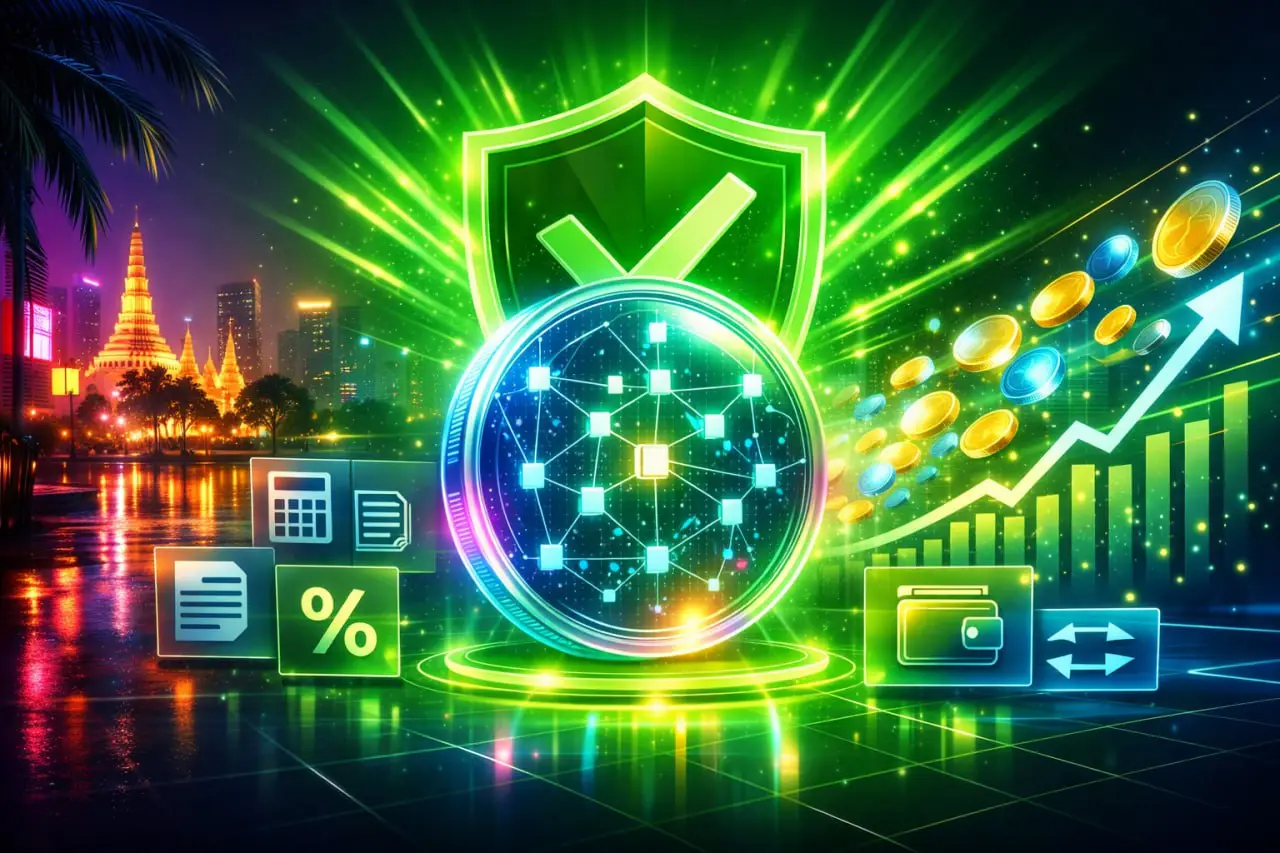
From 1 January 2025 to 31 December 2029, individuals in Thailand pay no income tax on gains from selling cryptocurrency and digital tokens, as long as the trade went through a Thai exchange, broker or dealer licensed by the Securities and Exchange Commission (SEC). The exemption was introduced by Ministerial Regulation No. 399, published on 5 September 2025, and it applies retroactively from the start of 2025. You don’t need to be a tax resident for it, and trades on foreign exchanges and P2P aren’t covered.
What exactly is exempt
The regulation exempts the gain from transferring a cryptocurrency or a digital token, meaning the difference between the sale price and what you put in. There’s one condition, and it’s about the platform: the digital asset exchange, broker or dealer must hold a Thai licence under the Emergency Decree on Digital Asset Businesses of 2018. The exemption only concerns personal income tax. It doesn’t change the tax on profits of companies and funds.
The government approved the proposal on 17 June 2025. The Ministry of Finance expects the market to grow and, in the medium term, to bring the budget at least 1 billion baht in taxes. That money would come not from the trades themselves but from the economic activity around them.
What the exemption doesn’t cover
Anything that bypassed licensed platforms: overseas crypto exchanges, P2P trades, informal swaps with individuals. The advisers Forvis Mazars and Acclime add income from mining, staking and airdrops to this list. It isn’t a gain from a sale, and that follows from the text of the regulation, although the Revenue Department hasn’t issued a separate clarification. The Revenue Department hasn’t yet clarified whether the exemption covers NFTs or swapping one cryptocurrency for another on a Thai exchange.
On top of that, some foreign exchanges are simply blocked in Thailand. Since 28 June 2025, at the SEC’s request, Bybit, OKX, CoinEx, 1000X and XT.COM have been blocked, and in 2026 they were joined by Exmix (from 2 May) and the Holdstation and UNO apps (from 1 October).
Do you need to be a tax resident
For the exemption itself, no: the regulation has no residence condition, it’s tied to the platform. A non-resident can also trade tax-free on a licensed Thai exchange.
Residence matters for something else: gains earned abroad. You automatically become a Thai tax resident if you spend 180 days or more in the country in a calendar year. Your visa doesn’t affect this: only the days count. You don’t need to register the status separately, but on request the Revenue Department issues a certificate of residence. It comes in handy for double taxation agreements.
Gains from an overseas crypto exchange
Since 2024 a resident pays tax on foreign income in the year they bring the money into Thailand, as required by Revenue Department Order No. Por. 161/2566. Income earned before 1 January 2024 isn’t taxed when transferred (Order No. Por. 162/2566). Advisers treat gains from an overseas crypto exchange as foreign income of this kind. There’s no direct clarification from the Revenue Department on the point.
In May 2025 the Revenue Department announced a relaxation: not taxing foreign income brought in during the year it was earned or the following year. As of September 2026 it hasn’t been adopted. It’s still a proposal, and the Thai press describes it as applying to Thai citizens. It’s too early to plan around it.
What to keep
Even if your gain is exempt, you should be able to work it out. Keep your history of purchases and sales, fees, exchange rates and transfer dates, exchange statements and documents on the source of funds. The bank will also need them if the transfer is large. How banks check this kind of money is covered in the article on currency control. Before filing a return, check your own case with a Thai tax specialist.
If the goal isn’t investing but getting baht for USDT to live on, that’s simpler: USDT to baht exchange in Pattaya (the service runs in Russian), in cash with delivery, to a Thai account or through an ATM. How to avoid getting your account frozen when swapping with strangers is covered in the P2P breakdown.