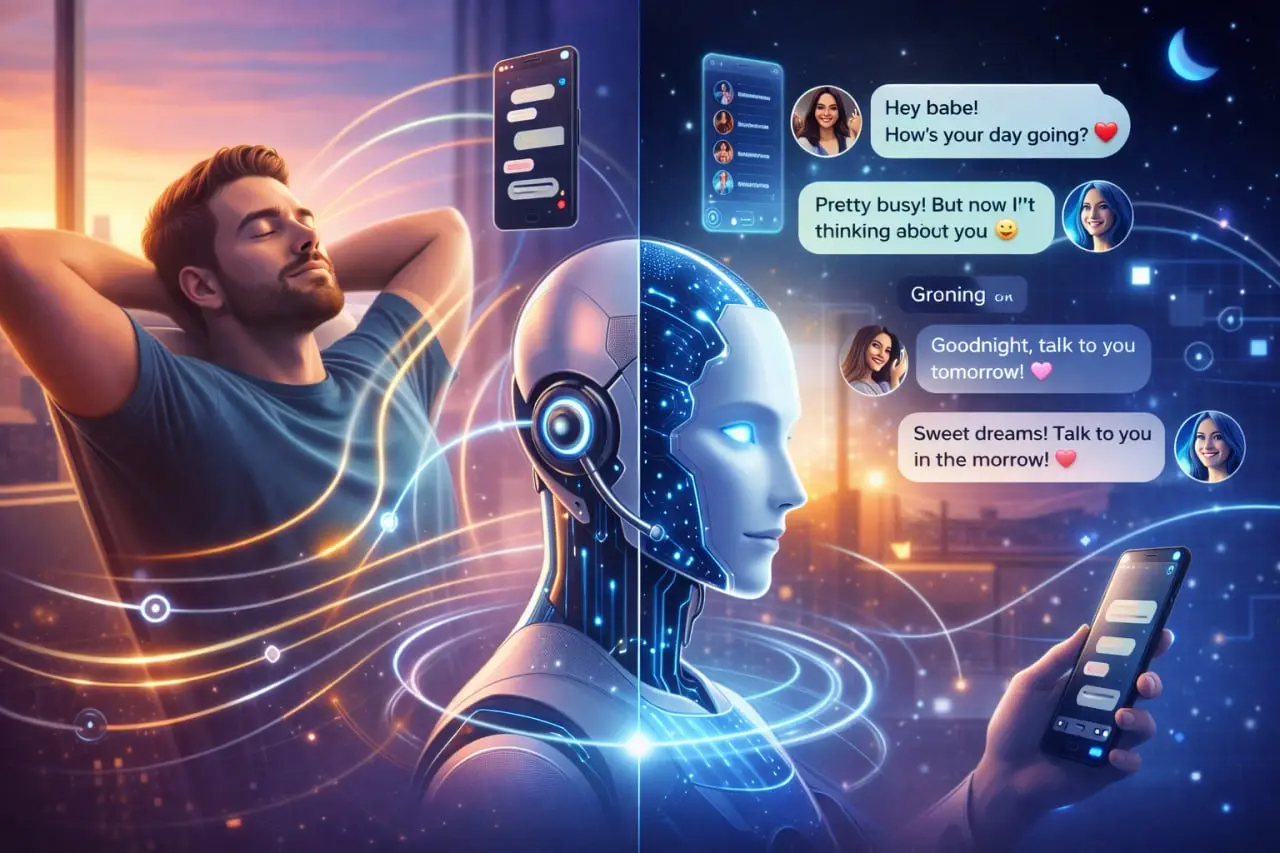
Arlan Rakhmetzhanov, an 18-year-old developer from Almaty and founder of the start-up Nozomio, hooked an AI agent built on Claude up to his chats with his girlfriend. In a post on X that drew millions of views, he wrote that the agent talks to her round the clock and keeps track of her mood. The code he published is more modest: the agent reads the Telegram chat, suggests replies, livens up messages and sends them when told to. It runs on Claude Sonnet 4.5.
This agent goes beyond template replies. It reads incoming messages, analyses their tone and suggests a reply the way an attentive, caring partner would: offer support at the right moment, crack a joke, sometimes leave it at a couple of emojis, and sometimes say nothing at all, so as not to break the emotional context. According to the author, it also keeps an eye on her mood.
From the outside, the conversation looks alive and remarkably precise. The agent draws its suggestions from a knowledge base hosted on Nia: more than five hundred opening lines plus a set of guides on keeping a conversation going. That lets it match the style of a reply to the situation, avoid needless arguments, not overload the conversation and keep the rhythm. The result is a lasting sense of constant attention and involvement.
In essence, it is the makings of an autopilot for relationships. The algorithm takes on part of the routine, the emotional labour and the attention to small details — the things that in ordinary life demand time, energy and constant involvement. For now, deciding what actually gets sent is still up to the human.
The experiment sparked a heated reaction online. Some see it as a logical step in an age of digital assistants and of automating everything that can be automated. Others see it as a warning sign: an example of technology starting to replace real human connection.
The author made no secret of the project and released the code publicly. He himself called it a joke project, and he says his girlfriend knew about the experiment. In the README he added a short note: “p.s: we broke up after this”. The question the project leaves behind is less of a joke: how far you can automate personal communication before the very point of a conversation between people disappears.
👉🏻 https://github.com/arlanrakh/talk-to-girlfriend-ai
On where the privacy line runs for an agent in a chat, see our breakdown of how to protect an AI agent in a group chat.
On models’ tendency to agree with everything — the Stanford study on AI flattery.